“How much does a CRM actually cost for a small business, and is the Return on Investment (ROI) worth the monthly subscription?”
In This Guide:
CRM Costing is the single most important factor that determines whether a small business will successfully digitize its sales pipeline or fail within the first six months.
If you are asking about the true price of sales software, you are likely overwhelmed by the massive price tags of “Enterprise” platforms. For many small business owners, the shock comes not from the base price, but from the “hidden” costs that pile up after you sign the contract.
In 2026, the market for sales tools has split into two worlds: the high-priced, complex platforms that require a full-time administrator, and the agile, Mobile CRM features designed for people who actually work for a living. To understand which one you need, we have to break down the true anatomy of CRM costing.
The Three Pillars of CRM Costing
When evaluating the budget for your sales team, you cannot look at the monthly fee in isolation. According to Gartner, up to 50% of CRM implementations fail—not because the software was bad, but because the “total cost of ownership” was too high for the team to sustain.
1. The Subscription Fee (Visible Cost)
Most traditional CRMs charge “per user, per month.” For a small team of five, a $50/month fee quickly turns into $3,000 a year. If you are a solo entrepreneur, this is a significant bite out of your profit margin before you’ve even logged your first lead.
2. Avoiding Hidden CRM Costing Fees
This is the part of CRM costing that most companies hide. If it takes your team 10 hours to learn the software, and their time is worth $50/hour, that is $500 per person in “lost productivity” just to get started. Complex tools like Salesforce often require expensive consultants just to set up basic workflows.
3. The Friction Cost (The ROI Killer)
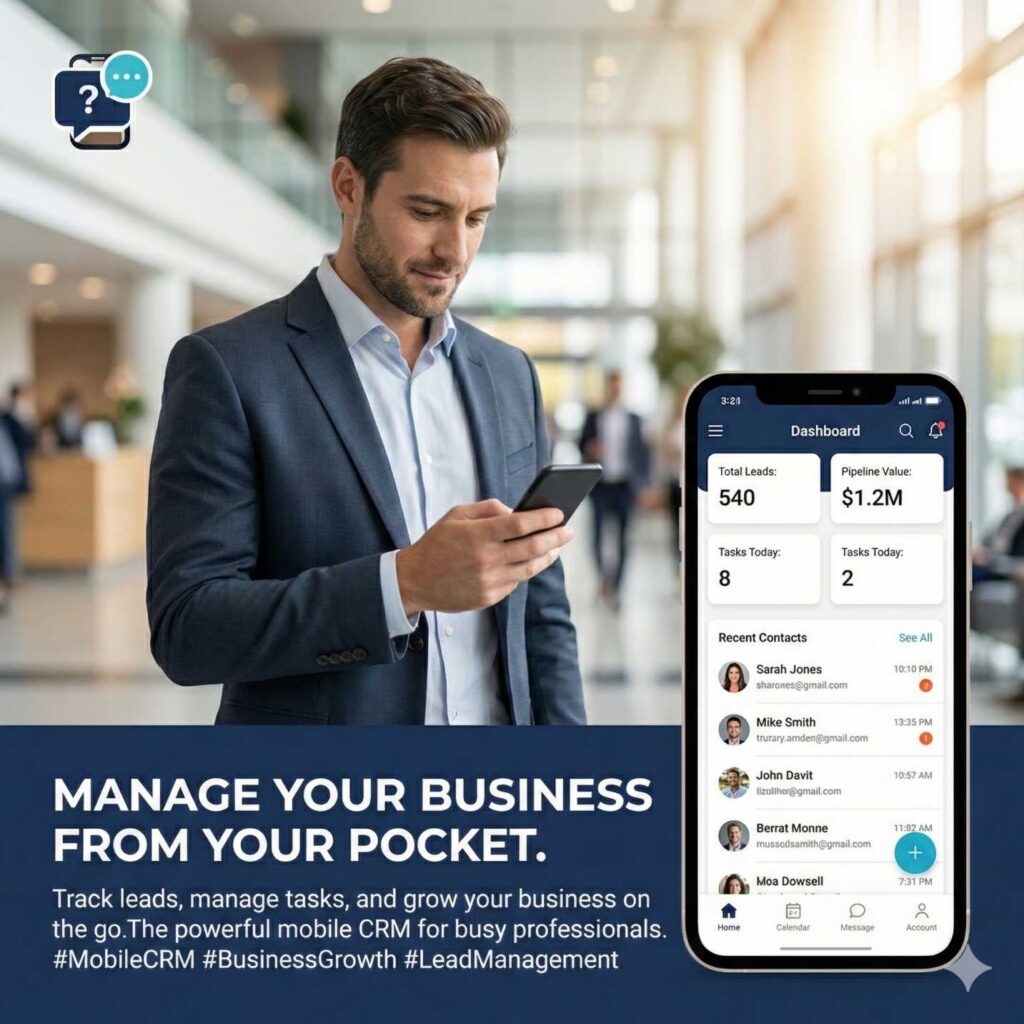
The most expensive CRM is the one your team doesn’t use. If a sales rep spends 2 hours a day on data entry, that is 10 hours a week they aren’t selling. This “Friction Cost” is why many businesses are moving away from desktop-heavy systems and toward frictionless tools like CallNoty.
Why CallNoty Dominates CRM Costing ROI
We built CallNoty specifically to kill the high CRM costing cycle. We believe that a small business shouldn’t have to choose between organization and profitability.
- Zero Learning Curve: Since CallNoty lives on your call screen via a smart overlay, there is no training required. You hang up, you tag, you’re done.
- No “Data Entry” Waste: By saving 2 seconds after every call, you save hours every month. In terms of CRM costing, this is money back in your pocket.
- Mobile-First Transparency: No hidden consultant fees. Just a powerful lead management tool that works wherever your phone goes.
The Cost of Doing Nothing: Losing Leads
The ultimate factor in your CRM costing analysis should be the “Cost of a Lost Lead.” If your average customer value is $1,000, and you lose just one lead a month because you forgot to follow up, you are losing $12,000 a year.
Suddenly, spending a small amount on a professional tool like CallNoty isn’t an expense—it’s an insurance policy for your revenue. As noted in Entrepreneur, the difference between a struggling business and a growing one is the quality of their systems.
Final Verdict on Small Business CRM Costing
Don’t buy more software than you need. If you have a massive sales force sitting in a call center, go for the enterprise platforms. But if you are a sales professional, a realtor, or a small business owner who lives on their smartphone, your CRM costing should be focused on efficiency and speed.
Author’s Recommendation: Reducing Your CRM Overhead
If you are looking for a simple, low-cost way to implement the strategies discussed in this guide, we recommend starting with CallNoty. It is currently the most efficient way to manage mobile leads without the high monthly fees of traditional platforms.
Ultimately, CallNoty provides the most frictionless experience on the market, ensuring your “Total Cost of Ownership” stays low while your lead conversion stays high. By automating the most tedious part of sales—the data entry—you free yourself to focus on what actually grows your business: the relationship.